







Prepared Licorice Root
The honey-roasted heart tonic of classical China — Prepared Licorice Root warms, tonifies Heart Qi and Blood, restores the irregular pulse, and brings deep, sweet nourishment to the Heart and all the organ systems it harmonises.

What Is Prepared Licorice Root?
Prepared Licorice Root (Zhi Gan Cao, 炙甘草) is the honey-processed (roasted) form of the foundational herb Licorice Root (Gan Cao, 甘草). The processing — coating slices of Glycyrrhiza uralensis root with honey and stir-frying until golden — fundamentally changes the herb's therapeutic emphasis: while raw Licorice Root (Sheng Gan Cao) is more cooling and detoxifying, honey-processing transforms it into a warm, powerfully tonifying herb with a significantly stronger action on the Heart and overall Qi and Blood.
Sweet and warm in nature, Prepared Licorice Root enters the Heart, Lung, Spleen, and Stomach channels. Its most clinically celebrated application is as the principal herb in the classical formula Zhi Gan Cao Tang (Honey Licorice Decoction, also called Restore the Pulse Decoction) — a formula specifically designed to tonify Heart Qi and Blood, nourish Yin, and restore the irregular, intermittent pulse from Heart Qi and Blood deficiency. This formula is one of TCM's most important cardiac-supporting prescriptions, used for palpitations, shortness of breath, and arrhythmia patterns from deficiency — applications now reinforcing modern interest in licorice compounds for cardiovascular health.
History & Origin
The honey-processed form of Licorice Root has been used in Chinese medicine since the Han Dynasty, with its distinct cardiac-tonifying properties documented by Zhang Zhongjing in the Shang Han Lun — one of the earliest and most authoritative TCM clinical texts.
Traditional Uses
Tonifies Heart Qi & Blood
The primary and most distinctive action — powerfully tonifies Heart Qi and nourishes Heart Blood, used for palpitations, shortness of breath, and cardiac weakness from Qi and Blood deficiency.
Restores the Irregular Pulse
The central indication in Zhi Gan Cao Tang — used for irregular, intermittent, knotted, or faint pulse from Heart Qi and Blood insufficiency failing to drive the Blood smoothly through the vessels.
Tonifies Spleen Qi
Strengthens the Spleen — the source of Qi and Blood production — supporting digestion, energy, and the generation of nourishing substances for the whole body.
Moistens the Lung & Stops Cough
Its sweet, moist nature soothes and moistens the Lung, used for dry cough, respiratory dryness, and Lung Qi deficiency.
Harmonises Herbal Formulas
Like raw Licorice, honey-processed Licorice also moderates and harmonises the actions of other herbs in formulas — a universal harmonising agent in TCM prescriptions.
Health Benefits
-
Heart Qi & Pulse RestorationThe foremost herb for Heart Qi and Blood deficiency — restores the irregular pulse and relieves palpitations in classical Zhi Gan Cao Tang.
-
Deep Qi TonificationWarms and tonifies Qi throughout the body — the Spleen, Heart, and Lung — for sustained energy and recovery from deficiency.
-
Lung MoisteningSweet, moist nature soothes Lung dryness and relieves dry cough from Lung Qi insufficiency.
-
CardioprotectiveGlycyrrhizin and liquiritin studied for anti-arrhythmic, cardioprotective, and anti-inflammatory cardiac support.
-
Enhanced ProcessingHoney-processing enhances tonic action, warming nature, and absorption compared to raw Licorice Root.
Soups Featuring Prepared Licorice Root
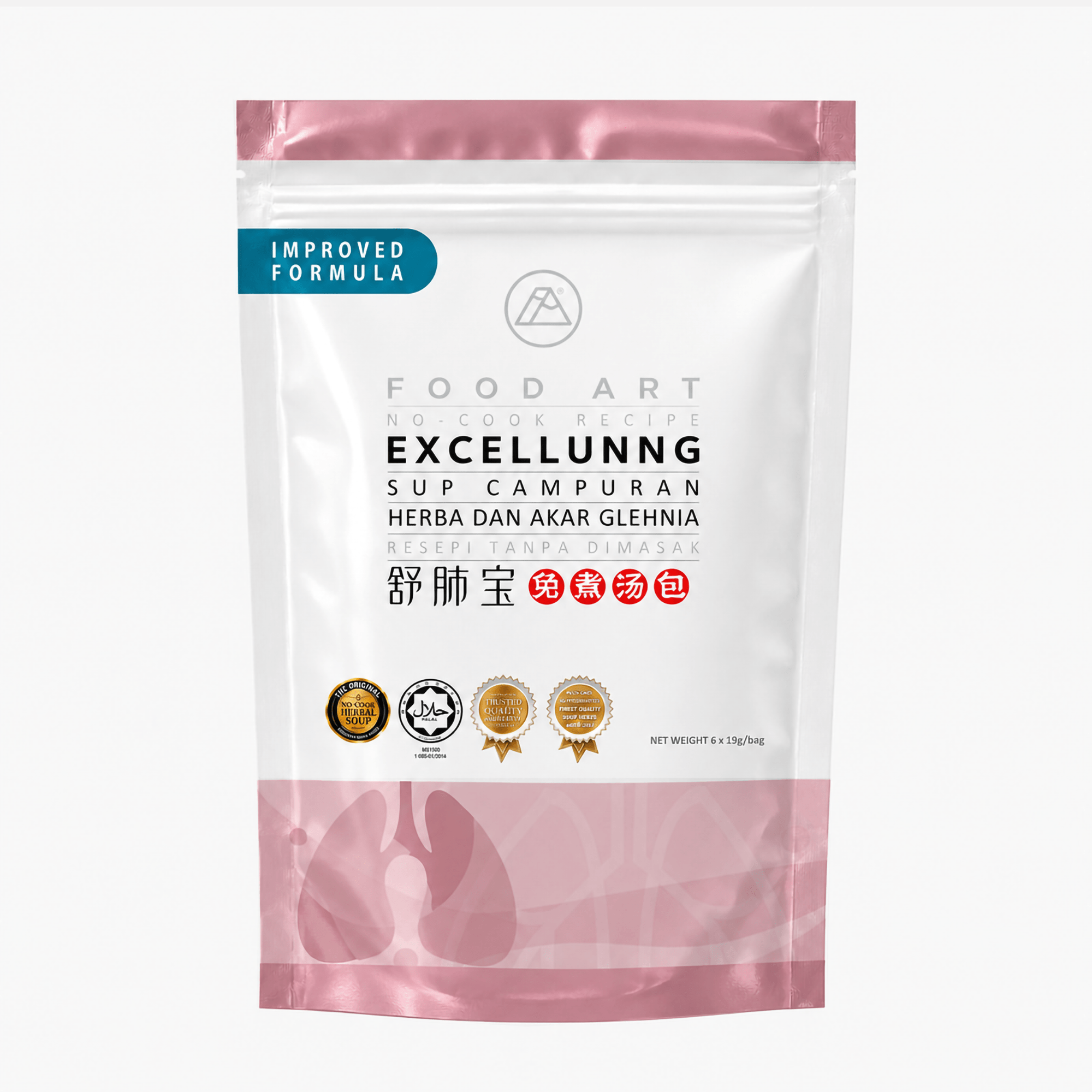
Prepared Licorice Root is a key ingredient in these Food Art no-cook herbal soups, thoughtfully formulated to deliver its nourishing benefits in a convenient, ready-to-brew format.


The information on this page is for educational and informational purposes only and is not intended as medical advice. Please consult a qualified healthcare practitioner before using any herbal products.